Over the last few weeks, we’ve been explaining ITMOs, Article 6 and how the market works.
But we haven’t really explained what we’re doing ourselves.
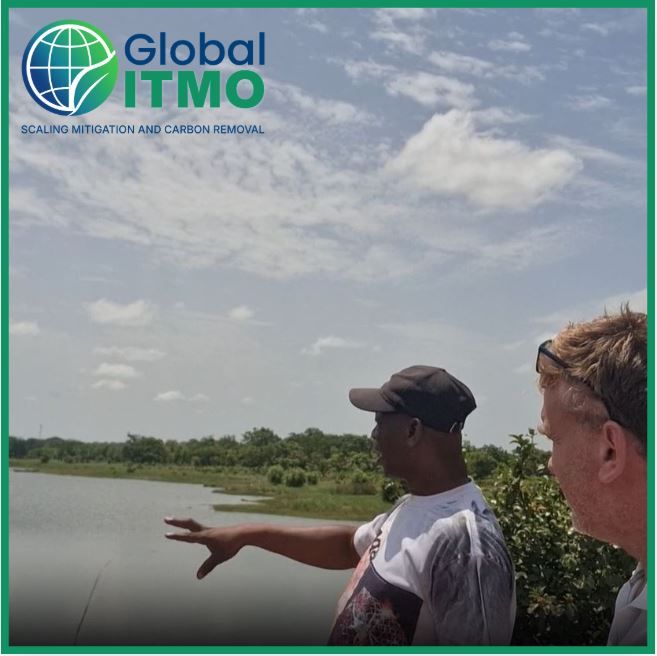
Global ITMO was created to develop projects in Ghana that combine agricultural development, environmental technology transfer and emissions reduction. We’re working with partners on the ground in Ghana, with circa 90,000 hectares of agricultural land contracted.
We have five environmental technologies we’re looking at, with the biggest opportunities currently around solar irrigation and fertiliser production.
Ghana’s farming is largely based around the wet season, which means much of the land is only producing for around three months of the year. Yet Ghana has significant rivers, lakes and groundwater resources.
Solar irrigation could extend the growing season to 12 months, allowing us to increase the range and volume of crops that can be produced.
There is also a lot of waste in farming. Our work on fertiliser production looks at how some of that waste can be put to use, while also reducing emissions.
So we’re looking at projects that can increase agricultural output and margins, while also creating measurable emissions reductions.
And that’s where the ITMO side comes in.
If a project can deliver measurable emissions reductions, those reductions may have the potential to be authorised for international transfer under Article 6 and thus monetised.
But the project comes first.
We aren’t building projects simply to create ITMOs. We’re developing real projects that have the potential to create both economic and emissions-reduction value.