Storelectric, one of the companies 350 PPM helped develop in its earlier stages, has been featured by the BBC for its plans to develop a large-scale energy storage project on Teesside. https://lnkd.in/egJvFUv3Their TeesCAES project is designed to store electricity as compressed air in underground salt caverns, then release it when the power is needed.Storelectric has now completed the acquisition of around 550 acres of industrial land on Teesside, and TeesCAES has been included in Ofgem’s minded-to decision list for support under its Long Duration Electricity Storage Cap and Floor scheme.Out of 171 initial applications, 16 projects were provisionally selected, with [...]
Read MoreOver the last few weeks, we’ve been explaining ITMOs, Article 6 and how the market works.But we haven’t really explained what we’re doing ourselves. Global ITMO was created to develop projects in Ghana that combine agricultural development, environmental technology transfer and emissions reduction. We’re working with partners on the ground in Ghana, with circa 90,000 hectares of agricultural land contracted. We have five environmental technologies we’re looking at, with the biggest opportunities currently around solar irrigation and fertiliser production. Ghana’s farming is largely based around the wet season, which means much of the land is only producing for around three months of the [...]
Read MoreWe’ve explained why a country might want an ITMO. But there’s still a fairly obvious question: where does the money actually come from? The short answer is: an international buyer pays for the authorised mitigation outcome created by the project. But how does that actually work?It starts with a real project.The project creates a measurable emissions reduction. That reduction is measured and accounted for, and if it meets the relevant requirements, the host country can authorise it for international transfer under Article 6.At that point, an international buyer can acquire the authorised mitigation outcome. The important thing to understand is that the government [...]
Read MoreTwo projects can both reduce emissions, but that doesn’t mean the ITMOs associated with them will have the same value. The project may be different. The country may be different. The cost of achieving the emissions reduction may be different. And buyers may be looking for different things. There isn’t a single formula that sets the value of an ITMO. Several factors can influence what a buyer is prepared to pay. • The projectWhat is actually creating the emissions reduction? Renewable energy, agriculture, forestry and other activities have different costs, technologies and ways of reducing emissions.• The mitigation outcomeWhat emissions are being reduced, [...]
Read MoreAn emissions reduction has value. But value and price are not the same thing.It starts with a project (perhaps a renewable energy project, improved agricultural practices or reforestation) that is designed to reduce or remove emissions.But simply reducing emissions doesn’t make something an ITMO. The emissions reduction needs to go through the relevant processes under Article 6, including authorisation for international transfer.Once authorised and transferred, the resulting ITMO can be acquired by a country and, subject to the Article 6 rules, used towards its NDC.So why would a country pay for one?Because it has a use for it.The project has [...]
Read MoreAn ITMO isn’t a project. Every ITMO starts with a project that reduces or removes emissions. That could be a renewable energy project, improved agricultural practices, reforestation, or another activity that creates a real, measurable reduction in emissions. Once those emissions reductions have been measured, verified and authorised under the rules of the Paris Agreement, they may be transferred from one country to another. Once authorised for transfer, those emissions reductions become ITMOs (Internationally Transferred Mitigation Outcomes). That’s the simple explanation.The interesting questions come next. Why would one country want another country’s emissions reductions?Where does the value come from?And why does understanding this emerging [...]
Read MoreThere is no shortage of information about ITMOs and Article 6.The challenge is that much of it is written for people who already work in climate policy and carbon markets. This page isn't here to impress you with technical language.It's here to explain what it actually means. On this page, we'll be sharing clear explanations of ITMOs, Article 6 and the ideas shaping this emerging market. We'll leave the technical papers to the technical experts. We'll focus on making them easier to understand. Next: What exactly is an ITMO?
Read MoreAnd right now, people are feeling the cost of that more than ever - mortgages, tax bills, and whether anything can still be built affordably.That’s part of why we keep coming back to construction materials.Homes still need building. Offices still need fitting out. Warehouses still need expanding. Schools still need upgrading.That doesn’t change.Yet many of the materials used across the sector haven’t really moved on.That gap is where things get interesting.EnviraBoard is working on turning recycled paper waste streams into construction boards with real commercial potential.No grand claims. No overstatement.Just a business focused on a very large, established market that [...]
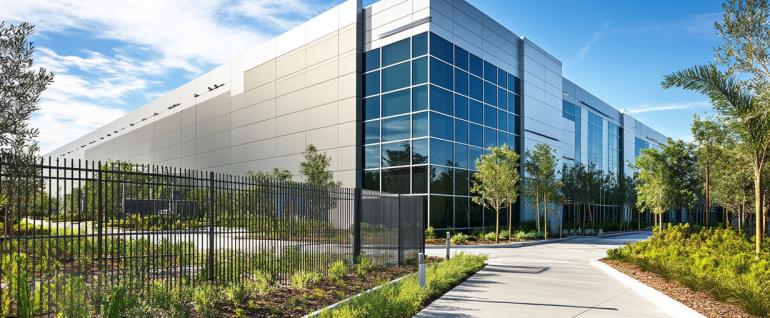
Read MoreHave you ever wondered what one of the UK’s largest data centres spends on electricity each day? The answer might surprise you — approximately £148,000 per day, with around 50% of that cost attributed to cooling alone. With Organic Heat Exchangers (O-Hx), we’ve been working on a smarter, more efficient solution. Through a special purpose electricity tariff, we’ve developed — featuring rates of 24p/kWh peak and 6p/kWh off-peak, with 12 hours of off-peak availability — data centres now have the opportunity to cut their cooling costs by up to 75%. Interested? Visit O-Hx 350 PPM electricity tariff. Unlocking more than just savings Our Energivault® [...]
Read MoreFor high-demand cooling applications, such as data centres, industrial facilities, andhospitals, absolute cooling resilience is critical. A 1MW water chiller running for one hour requires a significant power supply, typicallybacked by large lithium-ion battery banks, adding substantial costs and complexity. For O-Hx, we compared the cost and performance of 1MW of absolute cooling for one hourusing: Traditional 1MW water chiller + battery storage EnergiVault thermal energy storage (TES) Our analysis shows that EnergiVault offers a far more cost-effective and efficient solution,saving up to £940,000 compared to a traditional battery-backed chiller system. Read the full report here.
Read More